

Ready to optimize your tracking performance ?

Server-side isn't a marketing tool, it's an infrastructure project: you have to align IT, front-end, and analytics. Thanks to the synchronization between Didomi and Addingwell, we secured the tracking of our commercial margin and made our tracking data reliable across all our markets.

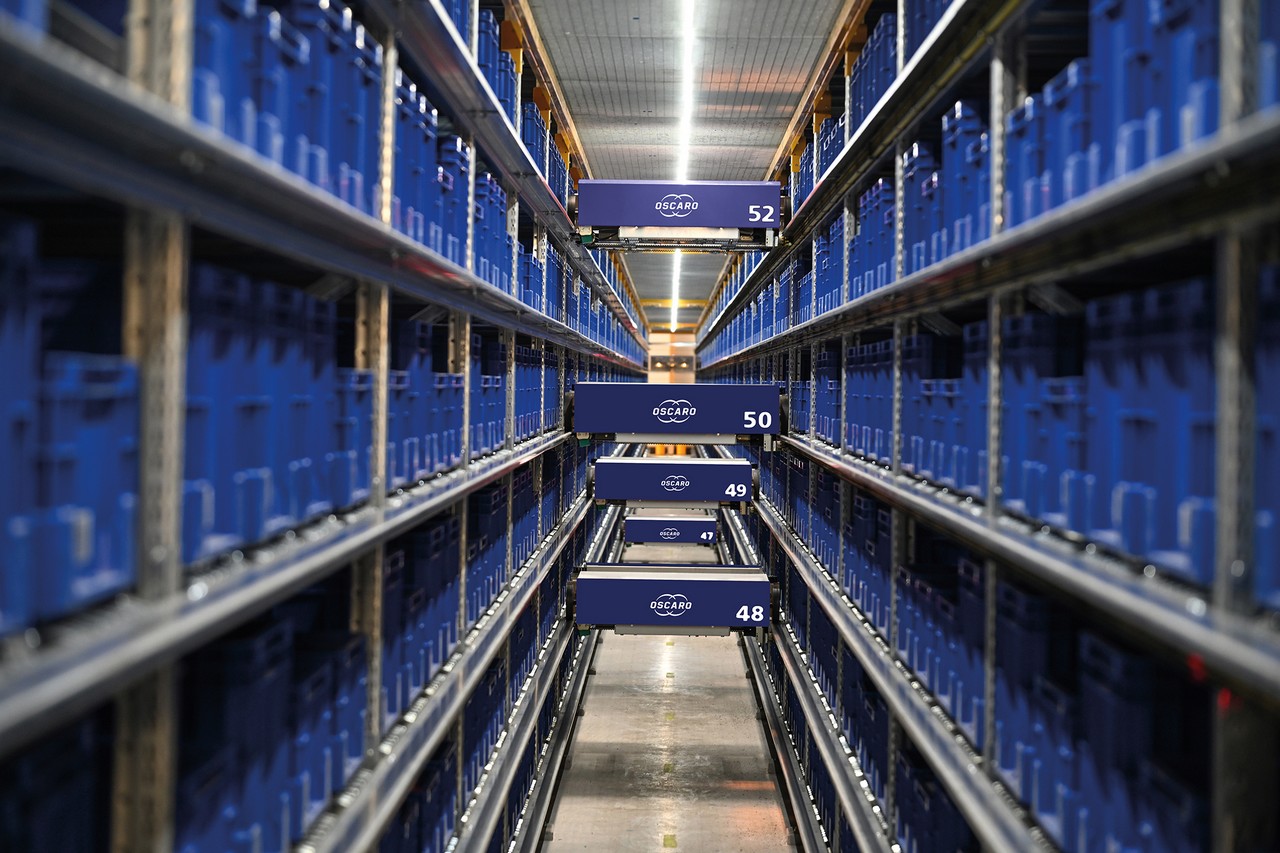
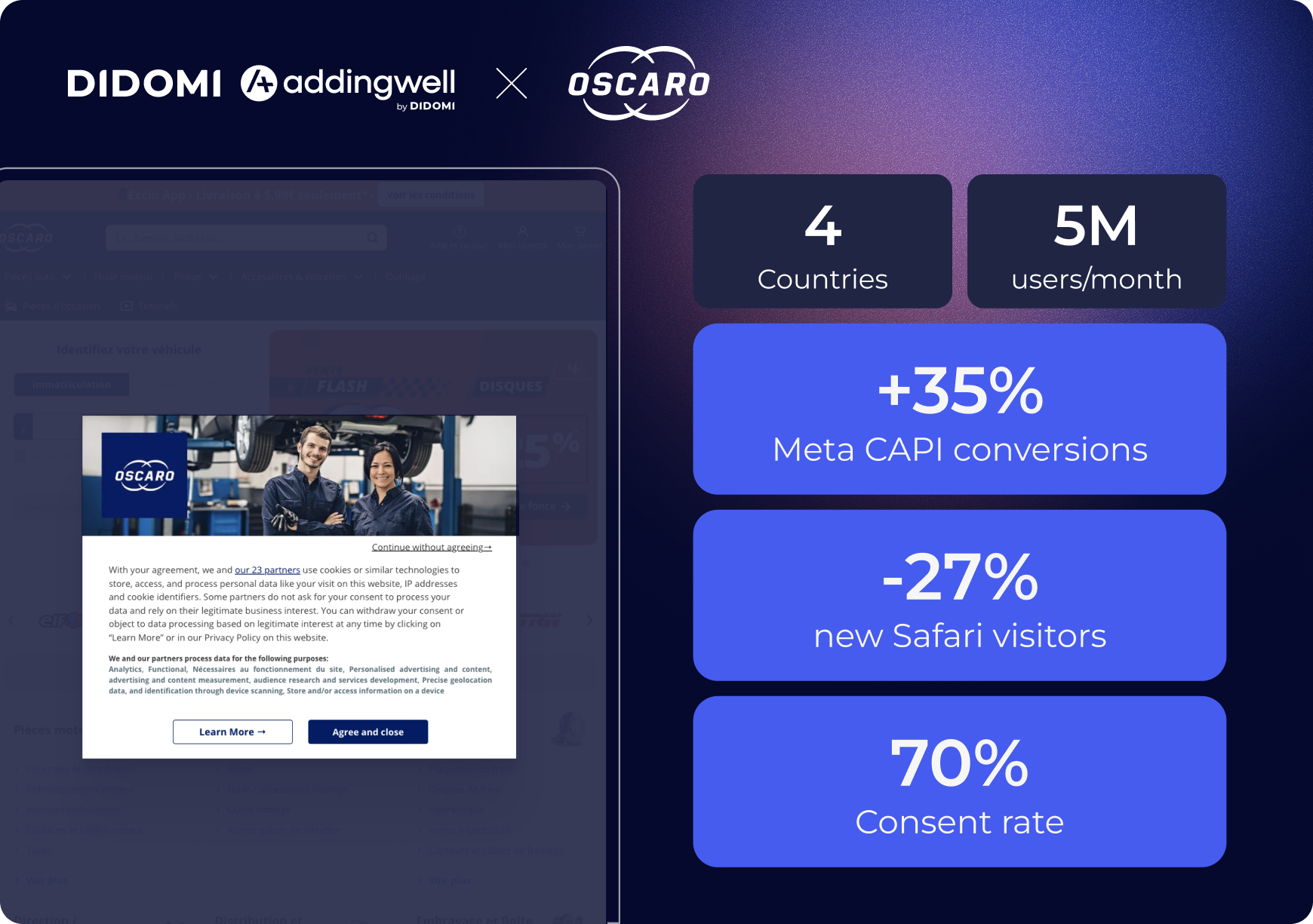
A pioneer and French leader in online sales of new, original automotive spare parts, Oscaro operates across France, Spain, Belgium, and Portugal with a catalog of more than one million part references. France accounts for 90% of the group's commercial activity. The platform welcomes 5 million users and 6 million sessions every month across its four markets.
Maxime Donnet, Analytics & CRO Manager at Oscaro for two years, oversees the company's entire web and app scope, from compliance to conversion. He led the migration to Addingwell's server-side tracking and the Didomi CMP alongside the IT, front-end, and analytics teams. The project was run as a full infrastructure initiative, and the resulting reliable measurement delivered more value than expected.
Challenge: high-value data, stuck on the browser side
Oscaro's team was already managing its GA4, Google Ads, and Meta tags in-house. The issue wasn't a lack of tracking, but its structural limitations, both on business data and on the reliability of the measurement itself.
- A use case blocked by client-side tracking. A site's data layer and source code remain readable by any knowledgeable user. A harmless gap for standard metrics, but a dealbreaker for an indicator as sensitive as the commercial margin paid back to suppliers. Making use of this data meant taking it out of the browser to process it in an environment Oscaro fully controls, end to end.
- An in-house banner running out of steam. Oscaro had built its own cookie banner internally. Faced with constant regulatory changes, this solution was becoming costly to maintain technically and was limiting marketing teams' autonomy over their own metrics.
- Measurement gaps that complicated decision-making. The gap between Google Analytics 4 data and the internal back office reached around 10%, making it difficult to get a reliable read on commercial performance.
- Audience miscounted on Safari and iOS. More than one in four "new" visitors wasn't actually new. These were returning visitors, recounted as new because of ITP's seven-day cap, which distorted the reading of acquisition on these browsers.
- A blind spot that stayed invisible. Without a reverse proxy, the consent banner itself could be blocked by certain ad blockers, preventing any downstream measurement without anyone noticing.
This diagnosis shaped the entire project. Server-side wasn't just one technical option among others, it was the condition for unlocking a previously inaccessible use case and for regaining control over measurement that had become unreliable.
Solution: on-premise server-side on GCP, a synchronized CMP
Deploying a server-side tagging infrastructure is within reach of many technical teams. Making the most of it, neutralizing ad blockers, correcting for ITP, setting first-party cookies, is another matter entirely. It requires dedicated expertise to operate this infrastructure continuously. A misconfigured tag, an event changed without notice, and an entire data flow to Meta or another partner can silently break.
Addingwell: an on-premise model that keeps Oscaro in control
Oscaro chose the on-premise model over a SaaS offering. In practice, the server-side setup runs within Oscaro's own Google Cloud Platform environment, under its own billing account. IT retains full control, with real-time visibility into server costs, its own security decisions, and end-to-end governance of the project. Addingwell continuously handles the part Oscaro doesn't want to bring in-house: stack maintenance, monitoring, alerting, and support.
This division of roles also benefits business teams, who reach out directly to Addingwell's support to add a tag or test a new use case, without going through the internal ticket queue.
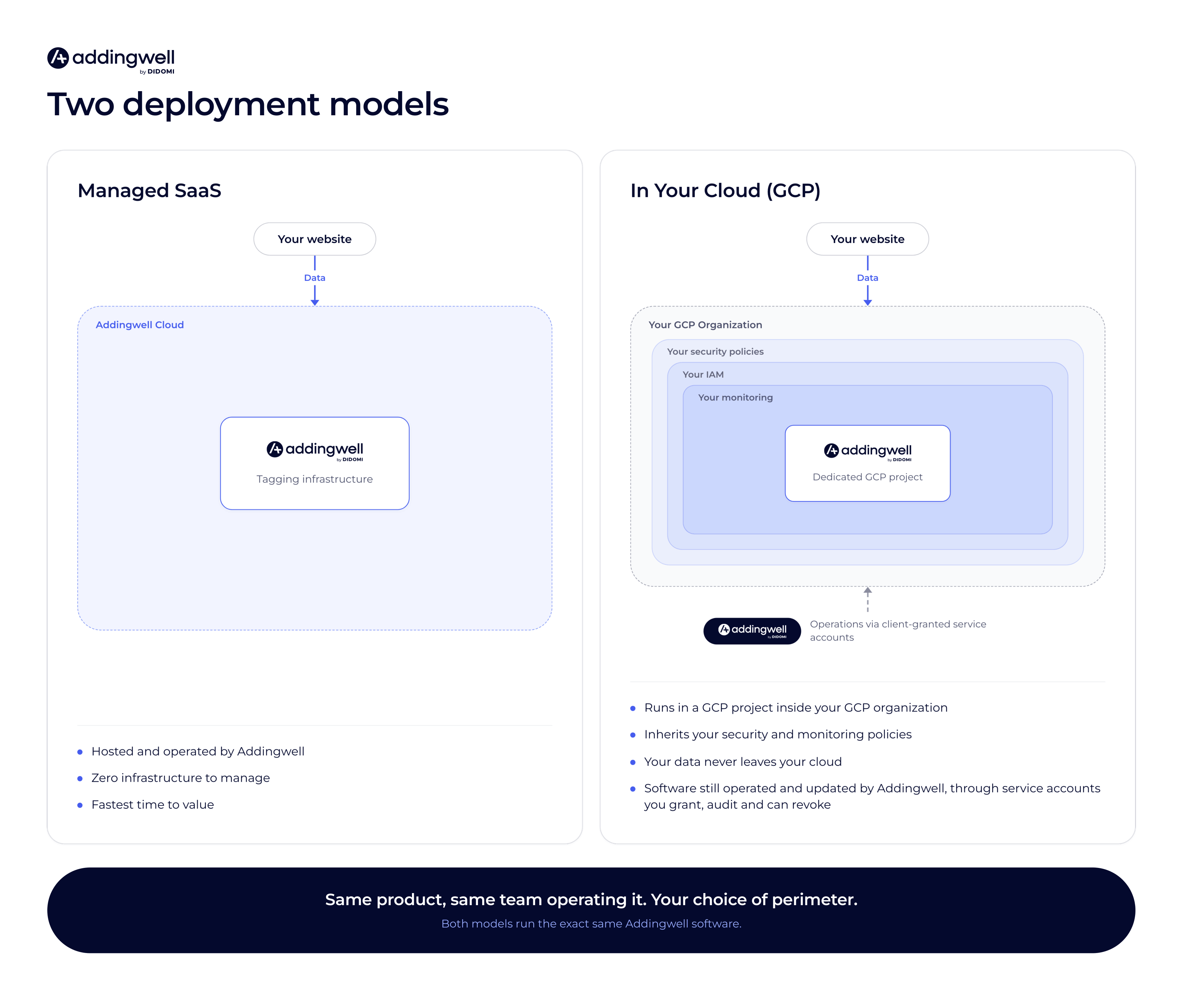
Financially, the choice paid off on two fronts. The on-premise model costs roughly half as much as an equivalent SaaS offering, and the actual bill came in under the initial estimates.
Didomi: a CMP built to sync with server-side
The Didomi CMP completes the setup on the consent side, with a similar goal of autonomy. Marketing teams edit their banner, add or remove a vendor, and track their consent rate without depending on IT. The deciding factor in choosing Didomi was its ability to tightly synchronize its consent data with Addingwell's server-side layer, a detail that would prove decisive down the line.
.webp)
A go-live without a safety net, but not without preparation
Three teams prepared the launch in parallel. The roadmap team, to avoid busy commercial periods. The technical team, to have everything ready on launch day. The analytics team, to absorb the shift in measurement reference points.
Due to budget constraints, Oscaro chose not to run the old and new systems in parallel (dual-run). This wasn't without methodological risk, since server-side structurally captures more data than client-side. Comparing before and after without precaution would have skewed the analysis. The analytics team worked around this by calculating an average on post-migration data, then applying a correction coefficient to historical series until a clean reference dataset could be rebuilt.
The result: four domains configured in one day, GA4 server-side and Google Tag Manager operational in under a week.
Onboarding was very good, with regular check-ins to validate or unblock the setup when needed. Post-onboarding, the support team is responsive whenever questions come up around server-side.
Maxime Donnet, Analytics & CRO Manager, Oscaro
Results: more reliable measurement, protected margin
The project's most unexpected benefit wasn't in the original plan. By cross-referencing Didomi's consent data with the server-side layer, teams from Oscaro, Didomi, and Addingwell spotted inconsistencies that led to identifying a pageview tag bug, invisible from the browser and undetectable without this cross-referenced data.
A second surprise emerged while analyzing gains browser by browser: on certain environments equipped with ad blockers, the CMP itself was being blocked. Without a banner, no consent is collected, so no tag fires. The fix, routing the CMP's SDK through Didomi's reverse proxy, is currently being rolled out and should further strengthen collection on Safari.
Measurement reliability and media impact

On top of this, the CDN and the bypassing of blocking mechanisms brought around 8% additional measured traffic.
The Safari case: a correction, not a loss
-27% new Safari visitors. A figure that reads like a loss but is actually a correction. ITP's seven-day cap was recounting returning visitors as new ones — more than one in four "new" Safari visitors wasn't actually new. Setting the GA4 cookie as first-party via Addingwell restores an accurate view of the audience, a far-from-marginal issue given that iOS traffic beyond eight days accounts for around 40% of Oscaro's total traffic, a volume comparable to Chrome's.
Technical performance and protected margin
The JavaScript weight of pages decreased by around 10% with the removal of browser-side tracking. Load time remains stable at this stage, with a more detailed Core Web Vitals analysis still to be carried out.
And the project's original goal has been met: commercial margin tracking is now fully handled server-side, with no business data ever passing through the browser.
Conclusion: an infrastructure project, not a marketing initiative
What this rollout demonstrates is that business data as sensitive as commercial margin can become a workable use case, provided it's processed where it's protected. Oscaro draws three lessons from this for any team considering a similar project.
The first is that a project like this should be treated as infrastructure, not a marketing tool. IT, front-end, and analytics need to be aligned from the outset, or the friction will surface once the rollout is already underway. The second is the importance of locking in your baseline metrics before switching over, especially in the absence of a dual-run period, so as not to lose the ability to compare before and after. The third is not to overpromise on expected gains, and to let reliable measurement speak for itself once it's in place.
On top of this, there's a more technical recommendation, born from a lesson learned in the field.
Go all the way with the first-party logic. Dedicated subdomains, and route the CMP's SDK through the reverse proxy too, otherwise the CMP itself can be blocked by certain blockers, and all downstream measurement disappears with it. We experienced this firsthand.
Maxime Donnet, Analytics & CRO Manager, Oscaro
For Oscaro, this project turned a regulatory constraint into an operational advantage. Commercial margin is now tracked with full confidentiality, Safari measurement reflects the real audience, and marketing teams have regained control over their consent banner. All of these benefits rest on a simple principle: treating consent and tracking as one and the same matter of trust.


.png)