Why your organic revenue is probably half what it should be - and what's hiding the rest
Sam Wright, founder of Blink SEO, argues organic search revenue is consistently underreported in GA4 for large Shopify stores and explains exactly why.


If you run a Shopify store and rely on GA4 to understand where your revenue comes from, your organic channel is probably underreported. Not by a rounding error - by a meaningful amount.
I have been working in eCommerce for the best part of 20 years, and the data quality problem has never been worse than it is right now. Between iOS privacy updates, ad blockers, cookie consent restrictions, and the increasing complexity of modern Shopify setups, the gap between what actually happens and what your analytics records has grown to the point where it is genuinely difficult to make confident decisions from a standard dashboard.
So how underreported is organic revenue, specifically?
The honest answer is: it depends on your business, and the range is wide. We have seen stores where the gap is relatively modest - perhaps 5% of revenue sitting in the wrong bucket. We have seen others where the misattribution is closer to 50%. Where you sit on that spectrum depends on your catalogue size, your acquisition mix, your consent setup, and a handful of other variables that interact in ways that are hard to generalise.
The profile we can speak about with real confidence is large-catalogue Shopify stores - businesses generating £5m or more annually, managing hundreds or thousands of SKUs, running paid acquisition alongside organic. We see these day in, day out. And for that specific type of store, the pattern is consistent enough that we can put a reliable number on it.
The benchmark
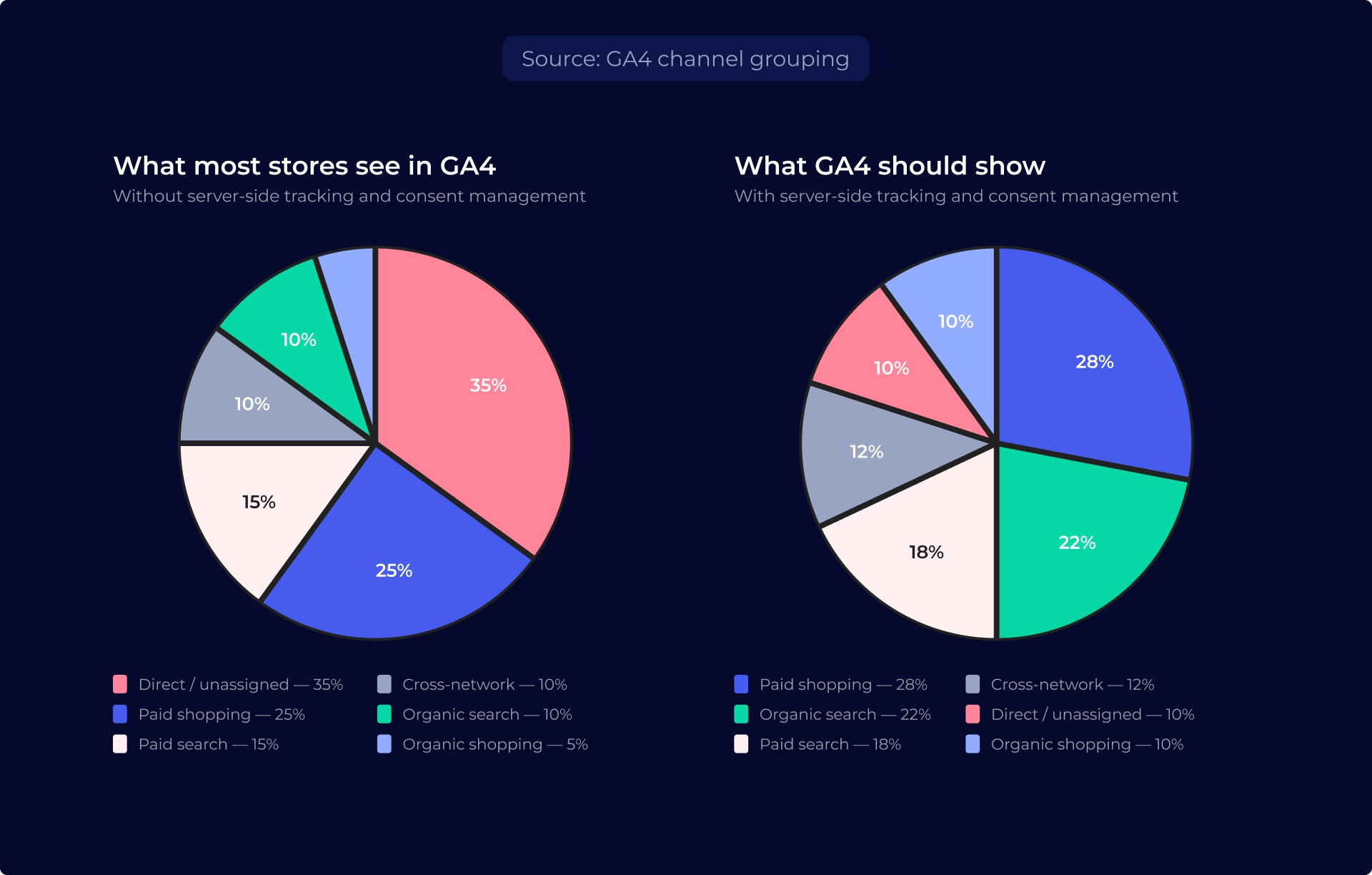
For a mature, large-catalogue Shopify store, organic search should be driving somewhere between 20% and 25% of total revenue.
If your analytics are showing something closer to 10% or 12%, the instinctive reaction is to treat it as an SEO problem. In our experience, it usually isn't. It is a data problem. And the distinction matters for two reasons:
- You risk questioning an investment that is already working.
- More importantly, organic search is typically your highest-margin revenue channel - there is no cost per click, no media spend, no auction to win. At 20% of revenue it is material. If your data is showing 10%, you are not just misreading your SEO performance - you are misreading your margin.
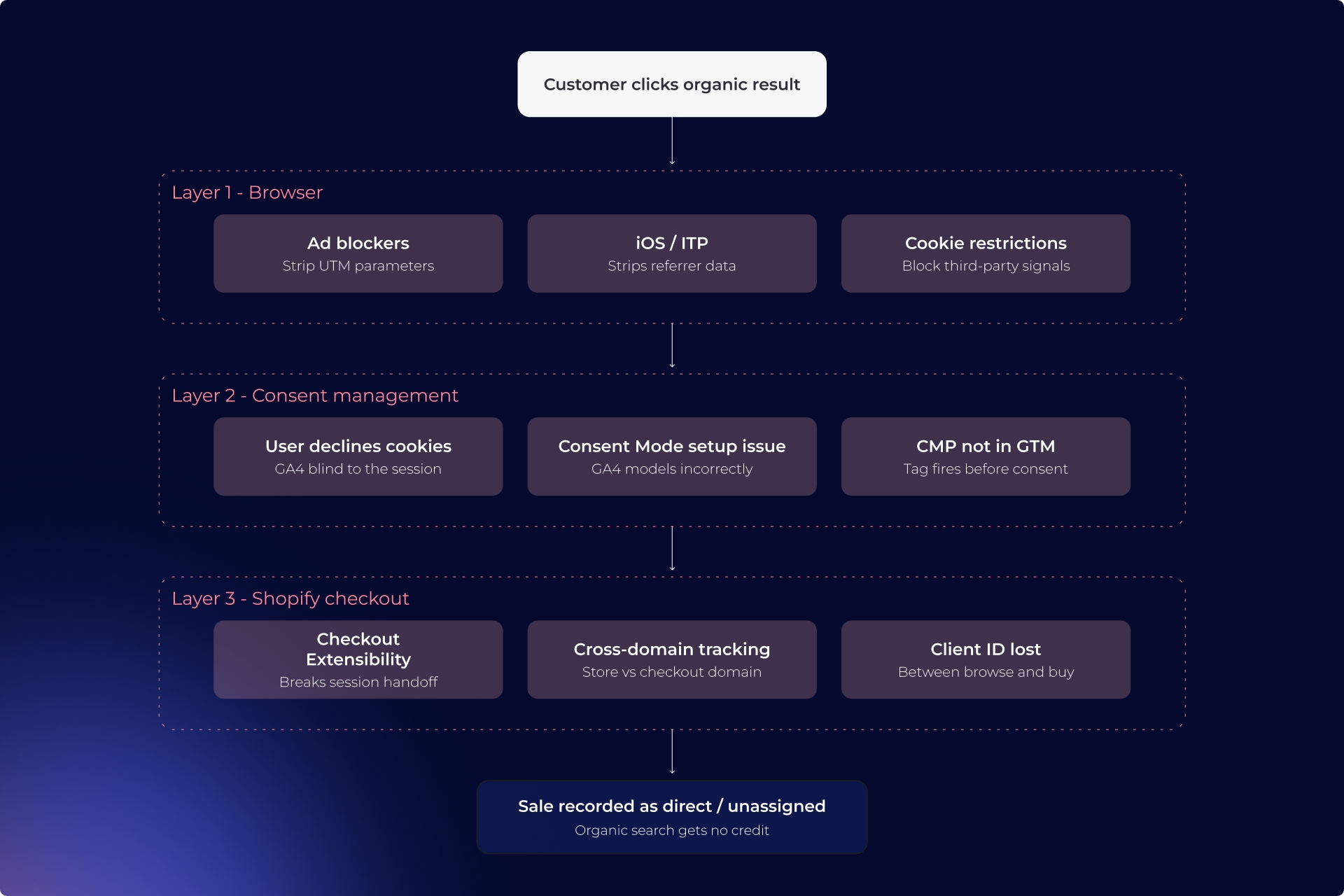
The revenue is not missing. It is almost always sitting in your Direct or Unassigned bucket, misattributed because the tracking layer lost the source somewhere between the click and the conversion.
The problem with platform reporting
When GA4 numbers don't match Shopify's backend, trust breaks down quickly. Teams stop relying on GA4 and start looking at platform-level reporting instead - pulling revenue figures directly from Meta or Google Ads.
The problem is that those platforms are marking their own homework. Meta finds new customers. Google Ads captures demand. Both want to claim credit for the final sale. When you add up the revenue each platform claims, the total often exceeds what Shopify actually processed that month.
GA4's job is to be the referee. It is supposed to strip out the double-counting and give you an honest view of how your channels worked together. When teams bypass it, they lose that picture entirely - and organic, which has no platform advocate lobbying for its share, tends to disappear from the conversation.
Where the organic revenue actually goes
So if organic revenue is being generated but not showing up correctly, where does it go?
It falls into the Direct or Unassigned bucket.
When an analytics platform loses the source of a visit, it defaults to labelling that user as direct. This happens constantly in the current browser environment. iOS privacy updates, ad blockers, and cookie consent restrictions all strip source data before it reaches your analytics. A customer searches for your product, clicks an organic result, and converts - but because the tracking link broke somewhere along the way, the sale is recorded as if they typed your URL directly into the browser.
There are also Shopify-specific nuances that make this worse. Features like Checkout Extensibility can interrupt the data handoff between your store and the checkout if they are not configured carefully, creating additional points of failure that are easy to miss.
The fix: moving tracking off the browser
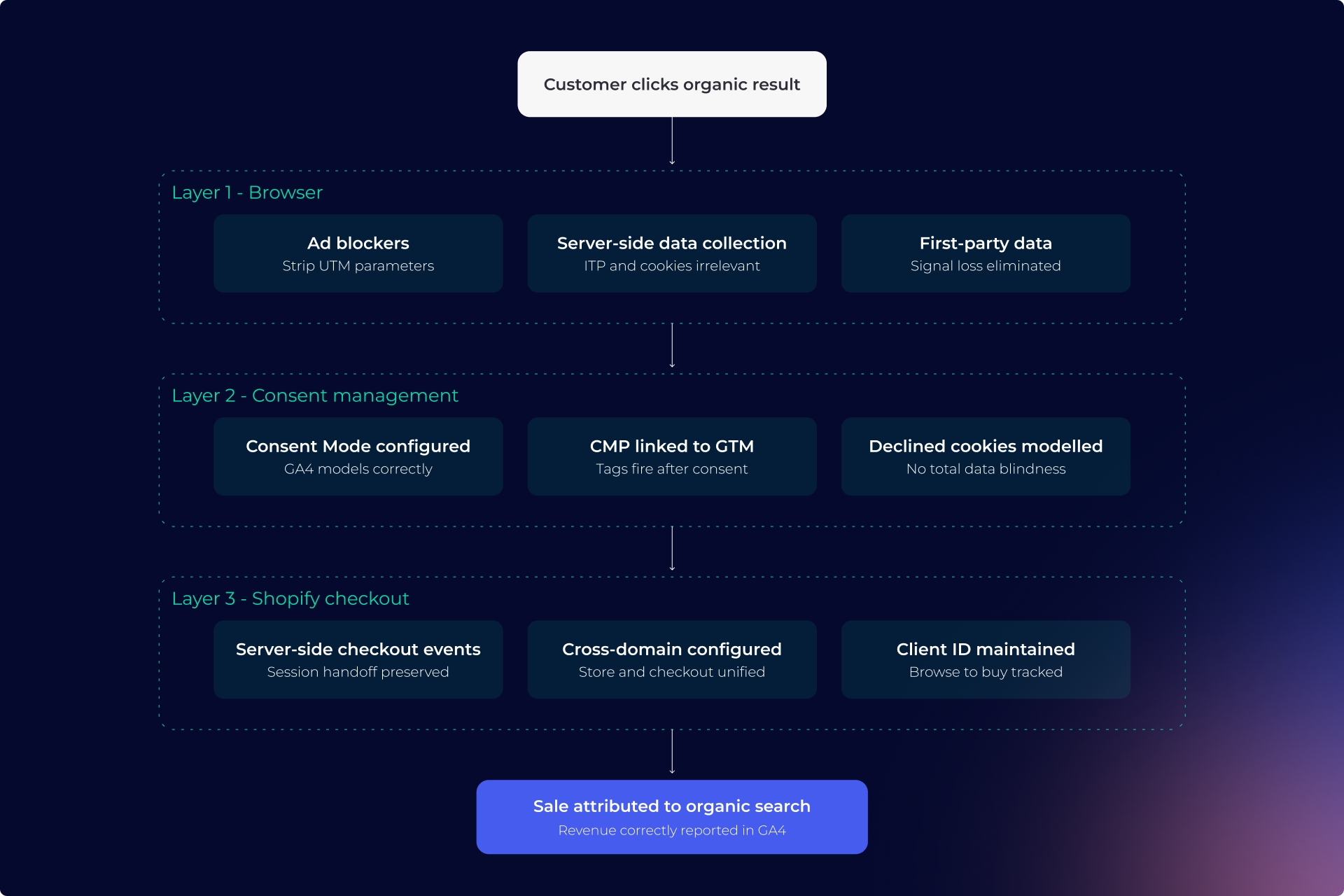
The reason these issues are so persistent is that standard analytics relies on the browser to collect and send data. The browser is also where all the interference happens - ad blockers, privacy settings, consent banners. You are asking the same environment that is causing the problem to also report on it accurately.
Server-side tracking resolves this by moving data collection to the server instead. Your server sends data directly to your analytics platform, bypassing the client-side layer where most of the signal loss occurs. Consent is handled properly without causing total data blindness.
This is the infrastructure change that consistently makes the difference for the stores we work with. Once server-side tracking and consent management are properly configured, the bloated Direct bucket shrinks, and the revenue that was sitting there gets reassigned to its actual source - most often organic search. It is the tool we use to fix this, and in our experience it is the most reliable solution available for Shopify stores.
What the corrected picture looks like
If you want to sense-check your own numbers before making any changes, there is a rough calculation worth running:
Reported organic revenue + 30% of your Direct/Unassigned revenue = a more likely baseline
So if your analytics shows £100k in organic revenue and £400k in Direct, the corrected estimate would be around £220k. That is not new revenue. It is existing revenue that your current setup is misattributing.
This model is imperfect, but it is based on years of watching these numbers correct themselves after fixing the tracking layer. It gives you a useful starting point for understanding the scale of the gap before you commit to any infrastructure work.
What this looks like in practice
This is not an edge case. It is a pattern we see consistently across Shopify stores - brands with solid SEO performance, healthy click growth in Search Console, but a GA4 picture that simply does not reflect it.
In store after store, the story is the same. Organic is reported at 10-12%. The tracking is audited. A combination of consent misconfiguration and a broken session handoff at checkout is identified. Server-side tracking is implemented via Addingwell. Within a reporting cycle, the organic share moves to 20-22%.
Nothing changed in terms of SEO work. The traffic was always there. The data just finally caught up.
If your organic revenue share is significantly below the 20-25% benchmark and your Search Console data tells a different story, it is worth asking whether you have an attribution problem before assuming you have a performance one.
The author